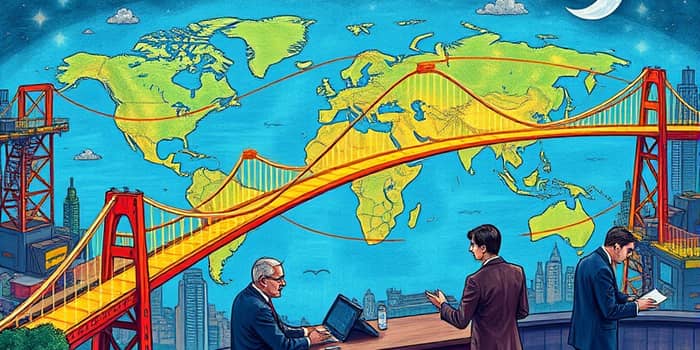
Economic diplomacy has become an indispensable instrument in today’s interconnected world, guiding nations toward growth, stability, and lasting partnerships. By harnessing state resources, policymakers craft strategies to expand market access, stimulate investments, and secure bilateral and multilateral agreements that benefit all participants. At its core, this practice balances national interests with shared global objectives, forging pathways to innovation and development.
As globalization deepens interdependence among states, economic diplomacy has evolved beyond narrow trade promotion into a comprehensive and multifaceted approach that integrates domestic decision-making, regulatory frameworks, and foreign policy goals. Through deliberate collaboration across embassies, economic ministries, and non-state actors, governments navigate complex international landscapes to cultivate resilience and mutual prosperity.
The aftermath of World War II marked a pivotal transformation in the practice of economic diplomacy. The soft power and influence wielded by the Marshall Plan (1948) illustrated how financial aid can foster reconstruction, political stability, and ideological alignment. By injecting capital into war-torn Europe, the United States propelled market expansion, technological innovation, and industrial rehabilitation, laying the groundwork for the continent’s rise.
Concurrently, the Bretton Woods Conference of 1944 established foundational institutions—the International Monetary Fund and the International Bank for Reconstruction and Development—that continue to shape global economic governance. Earlier, under President Taft, “dollar diplomacy” had already showcased how strategic investments and loans serve foreign policy ends, demonstrating the enduring synergy between economics and statecraft.
Modern economic diplomacy unfolds through three interlocking elements: commercial diplomacy, structural policies, and economic statecraft. Commercial diplomacy leverages political influence to ease cross-border transactions, while structural policies—such as trade agreements and regulations—cement stable, mutually beneficial relationships. Economic statecraft employs rewards and sanctions, wielding resources to achieve targeted objectives.
Coordinated by ministries of foreign affairs, commerce, and specialized agencies, these tools operate within coherent policy frameworks. Embassies and overseas offices execute ground-level initiatives, promoting national champions abroad, facilitating joint ventures, and resolving market failures. By aligning diplomatic outreach with business networks, states cultivate robust channels for information exchange and investment.
Today’s economic diplomats face fresh challenges and opportunities shaped by digitalization, environmental imperatives, and shifting geopolitical dynamics. Collaboration between state actors and non-official bodies has intensified, leading to joint ventures in technology transfer, climate finance, and global health partnerships. The World Trade Organization remains a focal platform for dispute resolution and rule-making.
Economic diplomats now serve as early warning analysts, advising home governments on emerging policies abroad and identifying leverage points for influence. The strategic use of data analytics and cross-border networks underpins more agile, informed decision-making in an era of rapid change.
Emerging economies and global powers alike showcase diverse approaches to economic diplomacy, adapting core principles to national strengths and regional ambitions. These real-world examples illustrate both the versatility and impact of well-crafted strategies.
In Brazil, the ABC champions trilateral collaborations, not only absorbing advanced practices but also exporting its own successes to African Portuguese-speaking countries and beyond. China’s “Peaceful Rise” doctrine channels investments and infrastructure financing across Asia and Africa, reinforcing geopolitical ties through commerce.
Kazakhstan’s MTI orchestrates high-level forums, such as the South-South Development Exchange, uniting 43 African governments to discuss industrialization pathways. Meanwhile, India’s DPA advances housing, energy, and transport projects in Sri Lanka, Afghanistan, and Africa, underpinning diplomatic goodwill with targeted aid.
Across all cases, the blend of policy coherence, institutional capacity, and on-the-ground engagement yields tangible outcomes—new trade corridors, joint research centers, and sustainable finance initiatives.
Looking ahead, economic diplomacy will continue to adapt, addressing cutting-edge issues in foreign policy such as digital governance, pandemic preparedness, and green transitions. By weaving economic imperatives with cultural exchange, states amplify their soft power—transforming partnerships into engines of innovation and shared well-being.
Ultimately, the true measure of successful economic diplomacy lies in its ability to foster inclusive growth, reduce global inequalities, and fortify cooperative frameworks. As nations navigate uncertainty, multilateral trade and investment agreements remain vital pillars upon which they can build resilient, forward-looking economies.
References