Global politics now exerts an unprecedented pull on financial markets and economic trajectories. In 2025, investors and policymakers alike find themselves navigating a landscape where traditional market drivers are interwoven with shifting alliances, trade disputes, and security flashpoints.
The stakes have never been higher: capital flows, risk appetites, and long-term growth prospects hinge on the interplay between statecraft and market sentiment.
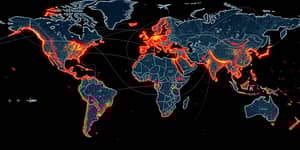
At the core of today’s volatility is the realignments in trade, finance, and investment direction triggered by intensifying power contests. The U.S.–China rivalry, Indo-Pacific tensions, and the conflict in Ukraine have reshaped cross-border flows and supply chains.
A recent survey of Chief Risk Officers found that 91% view geopolitics as a top-five risk over the next three years. Institutions are now overhauling capital allocation and risk frameworks to reflect this reality.
Meanwhile, emerging alliances in energy and technology—ranging from new hydrogen consortia to semiconductor partnerships—highlight how governments are weaponizing cooperation as a competitive advantage.
Geopolitical risk reaches markets via three main routes:
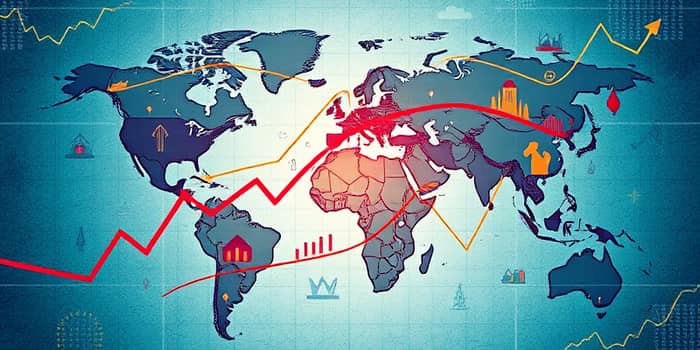
Geopolitical dynamics leave distinctive footprints across asset classes and regions. Equities often react first, with major conflicts producing an average 2.5% sell-off in the affected markets as corporate earnings and supply chains come under strain.
Bond investors demand wider sovereign risk premiums—up by roughly 30 basis points in advanced economies and 45 basis points in emerging markets. In acute crises, emerging market premiums can quadruple.
Currency markets tell a similar story. The U.S. dollar has weakened nearly 10% since January 2025 amid trade and policy uncertainties, prompting central banks to rebuild reserves—especially gold holdings—to their highest central bank holdings since 1965.
Commodity prices, particularly for oil, LNG, and critical minerals, fluctuate violently under sanctions and conflict scenarios. This turbulence accelerates investments in alternatives like hydrogen and strategic stockpiles.
One of the most significant developments is the fragmentation of the global financial system, as rival blocs form around different ideological and strategic priorities.
Traditional banks are retrenching from high-risk jurisdictions, while private credit and shadow banking expand to fill the void. This shift introduces novel vulnerabilities and regulatory challenges.
Governments are heightening scrutiny of foreign direct investment and cross-border M&A, embedding national security and ESG standards into approval processes.
To counterbalance these pressures, firms adopt supply chain nearshoring and investment rerouting alongside dynamic, geopolitically-oriented risk models to anticipate potential shocks.
Several events over the past year underscore how swiftly politics can rattle markets:
As geopolitical mapmaking intensifies, investors confront both headwinds and new frontiers for capital deployment. Multipolarity is creating alternative growth hubs in Southeast Asia, Eastern Europe, and Africa, fueled by infrastructure, climate, and food security projects.
Markets now carry an uncertainty premium, with higher return demands compensating for unpredictable policy shifts and potential conflicts.
Asia-Pacific stands out as the next engine of growth, though success there hinges on deftly navigating local regulations, evolving alliances, and strategic partnerships.
To thrive amid volatility, institutions should embrace agility and deep analysis. First, implement enhanced scenario analysis and stress testing to model shocks ranging from sudden sanctions to armed clashes.
Second, build robust liquidity buffers and diversify reserves—particularly in gold and hard currencies—to weather abrupt capital outflows.
Third, forge local partnerships to access real-time intelligence on political developments and regulatory shifts, ensuring swift adaptation.
Finally, anchor investment decisions in a framework that elevates geopolitical indicators alongside traditional financial metrics, aligning capital allocation with emerging power dynamics.
By integrating these strategies, organizations can convert market upheaval into opportunity and fortify portfolios against the unpredictable tides of geopolitics.
References