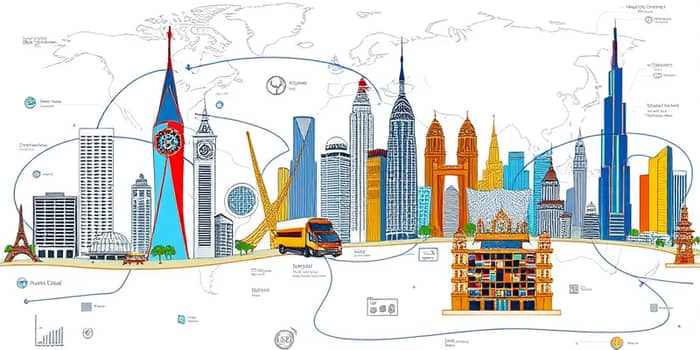
As we move into 2025, the global real estate market shows signs of cautious optimism. After a period of volatility, persistent sectoral and geographical divergence defines the landscape. Investors and occupiers alike seek clarity on where to allocate capital, which sectors promise growth, and which cities offer the best returns.
Drawing upon the latest data on pricing, rental performance, and transaction volumes, this article offers an in-depth guide to the forces shaping property markets worldwide, highlights the top hotspots for investment, and provides practical strategies to navigate risks and seize opportunities.
Global inflation has trended downward since 2024, yet central banks maintain restrictive policies. Interest rates are easing more rapidly in Europe than in the U.S., while Asia experiences pockets of deflation. High debt servicing costs continue to weigh on new development finance and refinancing activity.
Despite these headwinds, property prices have largely stabilized. Buyer and seller expectations are converging, leading to increased transaction volumes and renewed investor confidence. Even in markets where capital values remain under pressure, rental growth has been positive across all major sectors, underscoring resilient occupier demand.
The divergence in sectoral performance is more pronounced than ever. Logistics, driven by e-commerce and supply-chain dynamics, leads the pack, while residential markets offer stability and consistent income streams. Retail and hospitality compete for select prime assets, and data centers are emerging as one of the highest-yielding segments globally.
Regional trends highlight a shift from traditional gateway cities into high-potential secondaries and emerging markets. Southern Europe, the U.S. Sun Belt, Asia-Pacific and select Latin American locales are attracting substantial foreign capital.
In North America, Sun Belt cities like Austin, Phoenix and Orlando offer robust population growth and rental yields. Europe’s southern fringe—Lisbon and Athens—outpaces traditional markets, while Berlin retains appeal for tech-driven investors. In Asia-Pacific, Ho Chi Minh City and Bangkok benefit from rapid urbanization, and Dubai consolidates as a Middle East hub with tax-free incentives.
In the current environment, successful real estate investors adopt a diversified, thematic approach to protect returns and capture upside. Focusing on asset-level fundamentals through robust bottom-up analysis and direct intervention has become essential to ward off obsolescence and enhance value.
Looking ahead, demographic shifts and tourism flows will continue to shape demand. Retirement migrations to coastal and lifestyle-friendly cities, combined with digital nomadism, underpin long-term residential and hospitality opportunities. Geopolitical tensions may alter capital flows, highlighting the need for agility and local market expertise.
Investors should also monitor the rapid growth of the crowdfunding industry projected to reach $300 billion by 2025, unlocking access to smaller-scale developments worldwide. Meanwhile, the renewable energy and data center subsectors present structural tailwinds as governments and corporations prioritize decarbonization and data sovereignty.
Ultimately, the most successful strategies will balance conviction with flexibility—identifying high-conviction themes like AI-driven data centers and urban logistics while preserving optionality through diversified portfolios. By staying attuned to macro signals, sector disruptions, and emerging hotspots, investors can navigate the evolving real estate landscape and capitalize on the opportunities of 2025 and beyond.
References