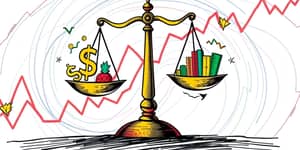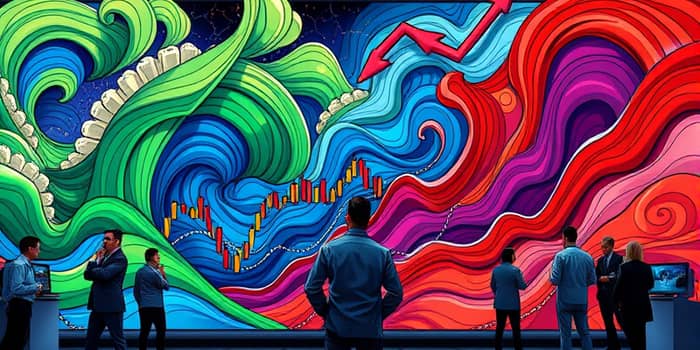
Every day, millions of investors log onto trading platforms, driven not only by numbers but by powerful feelings. Fear and greed rise and fall like ocean tides, sweeping markets into frenzied rallies or panicked sell-offs. Understanding these emotional currents can transform how you approach investments, helping you stay calm when others panic and cautious when optimism runs wild.
Overall mood or attitude among investors captures the essence of market sentiment. It describes whether participants feel bullish (optimistic) or bearish (pessimistic) about future price movements. In the short term, collective psychology often outweighs economic data, propelling prices in directions that fundamentals alone cannot explain.
John Maynard Keynes famously referred to this force as “Animal Spirits,” arguing that under uncertainty, cognitive biases and raw emotions drive decisions. When investors act as a herd, they amplify trends—creating bubbles of euphoria or crashes of despair, regardless of a company’s balance sheet or economic indicators.
Investor sentiment shapes both demand and supply. When optimism soars, buyers flood markets, pushing valuations above intrinsic worth. Conversely, widespread fear can trigger steep corrections, sometimes overshooting fair value in the opposite direction.
Sentiment extremes often produce bubbles and crashes. Think of the dot-com bubble: sky-high valuations in the late 1990s detached from profit potential. Or the panic of 2008, when a cascade of fear accelerated global sell-offs. Recognizing sentiment gauges can help you anticipate reversals—echoing Warren Buffett’s counsel: "Be fearful when others are greedy, and greedy when others are fearful."
Behavioral finance provides a framework for decoding why markets swing wildly. Underlying these shifts are a set of powerful biases that tug on investor psychology.
Institutions and analysts deploy a variety of gauges to quantify mood. By tracking actual positions and expressed attitudes, investors gain clues about potential turning points.
One of the most dramatic examples occurred during the late 1990s dot-com era. Fueled by overwhelming optimism and herd behavior, investors poured money into young tech companies with no profits, inflating stock prices to unsustainable levels. When reality set in, valuations cratered, wiping out trillions in market value.
In 2008, the global financial crisis showed the flip side. As mortgage fears spread, panic sellers flooded markets. The resulting liquidity crunch deepened losses, illustrating how collective fear can amplify downward spirals.
More recently, the COVID-19 crash and recovery illustrated rapid sentiment swings—from extreme pessimism to record optimism in mere weeks—highlighting emotion’s power to drive volatility.
Some investors prefer riding the wave, buying into strength and selling into weakness. This trend-following approach can be profitable, but it risks buying at the peak of exuberance or selling at the depths of fear.
Contrarians, by contrast, seek to exploit extremes in market sentiment. They buy when others are panicking and sell when others are euphoric, often capturing gains as markets revert to fundamental value.
Sentiment measures serve as contrarian indicators: an overwhelmingly bullish consensus can signal a market high, while pervasive bearishness can mark a bottom.
Despite its insights, sentiment analysis carries risks. Emotional indicators can flip rapidly in response to breaking news or unexpected events, leading to whipsaws in trading signals.
Moreover, in markets with low volatility or mixed signals, sentiment readings may be inconclusive. Over the long term, price trends align with underlying fundamentals, making purely sentiment-driven strategies less reliable over extended horizons.
To harness sentiment responsibly, blend it with other disciplines. A well-rounded approach balances emotional signals against financial metrics and technical patterns.
By integrating emotional insights into a broader investment framework, you can navigate turbulent markets with confidence, turning the tides of fear and greed into opportunities for growth and resilience.
References