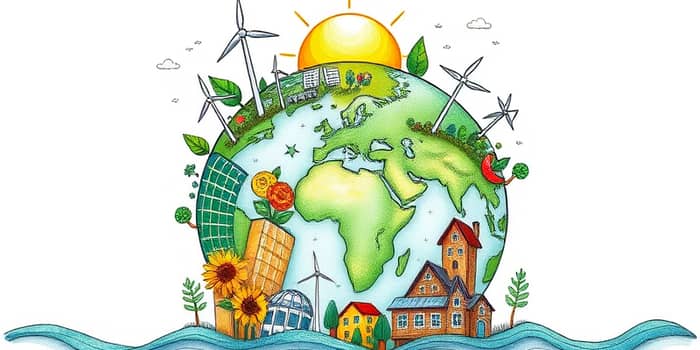
The world stands at a crossroads where capital can either perpetuate long-standing inequalities and environmental harm or act as a catalyst for a resilient, inclusive future.
In this era of pressing climate challenges, sustainable finance has emerged as a vital force, reshaping markets and economies across all regions.
Sustainable finance integrates environmental, social, and governance considerations into financial decision-making, aiming to direct capital toward ventures that address modern crises.
It spans instruments such as green bonds, social bonds, and sustainability-linked loans, as well as investments in renewable energy, climate-resilient infrastructure, and nature-positive projects.
As of 2024, the global market was valued at USD 6.61 trillion and projected to reach USD 38.19 trillion by 2034, reflecting a robust CAGR of about 19.2%.
Some estimates place 2024 levels at USD 5.87 trillion, underscoring methodological differences but confirming a rapid growth trajectory of sustainable finance worldwide.
While Europe remains the established leader, other regions are accelerating to capture a larger share of sustainable capital.
In the first seven months of 2025, global sustainable bond issuance reached US$975 billion, driven by multilateral development banks taking early risks to unlock private funding in emerging markets.
APAC’s issuance of US$274 billion in the same period signals a transformative pivot toward energy transition and climate-resilient infrastructure.
Several interlinked forces are propelling sustainable finance into the mainstream:
The sustainable finance landscape encompasses diverse areas poised for transformative impact:
Investments in transition bonds and sustainability-linked bonds are growing, offering tailored pathways for heavy industries to reduce emissions gradually.
Bridging the financing gap for the UN Sustainable Development Goals remains a monumental task. Current estimates indicate an additional US$4 trillion per year is needed, with the gap potentially widening to US$6.4 trillion by 2030 if systemic reforms are not implemented.
Blended-finance structures are gaining traction, combining public and private funds to scale projects in emerging and developing economies.
Beyond carbon reduction, sustainable finance drives job creation, enhances social inclusion, and builds resilient communities.
Despite enthusiasm, the field faces critical headwinds:
Greenwashing Risks demand stricter standards and comprehensive ESG reporting and transparency to maintain credibility.
Political fragmentation, especially in major economies, can stall momentum and create regulatory uncertainty.
Emerging markets often struggle to attract sufficient capital, highlighting the need for capacity building and risk mitigation instruments.
The outlook for sustainable finance remains promising. Continued innovation in financial instruments, such as blended-finance models mobilizing private capital, is expected to unlock new opportunities.
Asia-Pacific’s dynamic growth and Europe’s policy leadership will shape the global agenda, while North America and MEA regions increase their share of green investments.
As sustainability considerations become fully embedded in portfolios, the financial system will play a decisive role in steering global economic transformation toward a future that is equitable, resilient, and aligned with planetary boundaries.
References