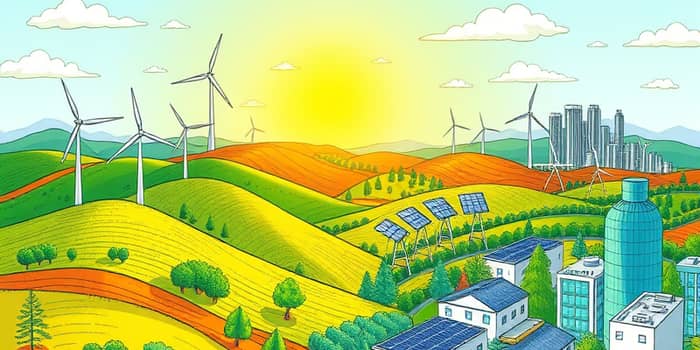
The global financial landscape is undergoing a profound transformation as investors, regulators, and stakeholders increasingly recognize the interconnectedness of economic prosperity and environmental stewardship. In 2025, sustainable finance has reached unprecedented scale and sophistication, with market participants actively integrating environmental, social, and governance criteria into their strategies. This evolution is not merely a response to regulatory pressures or public sentiment; it reflects a fundamental shift towards prioritizing resilience and long-term value creation. Across public and private sectors, institutions are deploying capital to projects that promise measurable environmental benefits while delivering competitive returns.
By weaving ecological concerns into the fabric of financial decision-making, sustainable finance seeks to mitigate climate-related financial risk and fortify economies against the consequences of environmental degradation. As we navigate an era of heightened climate volatility and resource scarcity, the demand for green investments has never been greater. This article explores the latest instruments, mechanisms, and trends driving the sustainable finance movement, offering practical insights for professionals and enthusiasts committed to catalyzing a greener future.
Sustainable finance refers to the allocation of capital in a manner that aligns with environmental, social, and governance objectives while still pursuing financial returns. It represents a paradigm shift from traditional metrics of performance, embracing a holistic view that accounts for externalities such as carbon emissions, resource depletion, and social equity. The ultimate goal is twofold: to generate profit and to foster positive outcomes for societies and ecosystems.
Key drivers of this transformation include evolving regulatory frameworks, heightened investor activism, and growing consumer awareness. Governments worldwide have introduced policies like the EU’s Sustainable Finance Disclosure Regulation and expanded tax credits under the US Inflation Reduction Act, compelling financial institutions to scrutinize their portfolios. In parallel, asset owners and beneficiaries are demanding greater transparency and accountability, setting the stage for sustainable finance to become a mainstream fixture in capital markets.
Green, social, sustainable, and sustainability-linked bonds collectively known as GSS+ instruments, are at the forefront of sustainable finance. In 2025, global issuance of these bonds is projected to surpass USD 1 trillion, reflecting robust investor appetite for fixed-income products that deliver environmental and social benefits. Issuers benefit from lower interest rates and favorable sentiment, while allocations support critical projects such as renewable energy, sustainable agriculture, and affordable housing.
Beyond bonds, blended finance vehicles merge public and private capital to de-risk projects in developing economies. These structures unlock billions for sustainable agriculture, clean water, and resilient infrastructure, bridging the gap between concessional funds and market-rate investments.
Several notable trends define the current sustainable finance landscape:
Sectoral shifts are also evident. Solar capacity additions in the US surged by 35.3 GW in 2024, and by 2035, zero-emission vehicle production could cover up to 67% of domestic demand. These developments underscore a broader acceleration of sustainable supply chains and industrial capacity building.
New structures and markets have emerged to channel funds into critical technologies and industries. The rise of tax equity and credit transfer markets has lowered barriers to solar and wind project financing, while hybrid instruments standardize terms to expedite deal closure. Venture capital flows are increasingly targeting climate tech startups specializing in carbon removal, green hydrogen, and negative emissions technologies, reflecting investor confidence in breakthrough solutions.
Green banks and dedicated financial institutions are also pivotal. These entities leverage specialized expertise and public guarantees to mitigate perceived risks, encouraging private sector participation. Through targeted instruments and advisory services, they ensure that promising projects receive the tailored support necessary for successful scaling.
Several growth avenues beckon, yet headwinds remain significant. Key opportunities include:
However, policy uncertainty and geopolitical tensions pose threats to investment flows, particularly in wind energy and emerging markets. In 2024, capital commitments to infrastructure and renewables in developing countries fell by over 30%, highlighting the volatility that must be managed to sustain momentum.
Illustrative examples bring theory to life. One leading utility issued a $2 billion sustainability-linked bond tied to methane emissions reductions, achieving both financial savings and greenhouse gas cuts. In Africa, a blended finance fund partnered with local private banks to deploy $500 million in climate-smart agriculture loans, spurring adoption of drought-resistant crops and reducing food insecurity. These cases demonstrate how tailored structures can align incentives, distribute risk, and deliver tangible benefits across regions.
Furthermore, multilateral development banks have ramped up their commitments. At COP29, they pledged $120 billion annually by 2030 and $300 billion by 2035 in climate financing. Such pledges signal a reinforcement of global cooperation to address systemic environmental challenges.
Robust governance frameworks are essential to maintaining credibility. Investors are establishing real impact measurement and transparency protocols, including third-party verification and climate risk task forces. Transition investment plans are being codified to guide capital away from high-carbon assets, ensuring alignment with net-zero pathways.
Looking ahead, the sustainable finance ecosystem is poised for further expansion. Innovations in carbon capture, green hydrogen, and large-scale energy storage will attract new capital pools. Meanwhile, evolving regulations will sharpen definitions of “green” and streamline reporting, minimizing greenwashing risks. As mainstream and niche players converge, sustainable finance will continue to redefine value creation and resilience in the global economy.
By harnessing the power of financial innovation and collaborative action, stakeholders can unlock the full potential of green investments. The choices made today will shape the health of economies, communities, and the planet for generations to come. Engaging proactively with these emerging mechanisms is not simply an option; it is an imperative for a sustainable and prosperous future.
References