As the world economy approaches the mid-2020s, the global balance of economic power is undergoing a profound transformation. Traditional leaders maintain their positions, yet a new cohort of rising states is staking a claim on the world stage. In this article, we explore the dynamics, numbers, opportunities, and challenges shaping the next generation of economic superpowers.
Drawing on the latest projections and expert analysis, we reveal how established giants adapt, how emerging markets accelerate, and what risks loom on the horizon for every contender. Whether you are a business leader, investor, policymaker, or simply curious, this overview offers both inspiration and practical guidance for the years ahead.
At the top of the economic pyramid, the United States retains unquestioned global superpower status. With a GDP of $28.78 trillion in 2024, the U.S. benefits from favorable geographic positioning and stability, robust institutions, and a defense budget of $778 billion. Yet it must confront political polarization and internal discord that could undermine future policymaking and economic resilience.
China remains the world’s second-largest economy, boasting a GDP of $14.7 trillion in 2020 and growth of over 70% since 2015. The nation pours billions into infrastructure, renewable energy, and digital technologies, representing massive investment in green and digital technologies. Its defense outlay of $252 billion cements a formidable military presence. Still, it faces headwinds from an aging population, a real estate crisis, and tight government controls that may slow progress.
India is on track to become the third-largest economy within a few years, driven by a projected 6.5% GDP growth rate for 2025. Supported by a young and dynamic population growth—over 65% under the age of 35—India is rapidly expanding manufacturing, information technology, and pharmaceutical sectors.
Investment in mega-scale industrial corridors and digital infrastructure is reshaping its economic landscape. Yet persistent challenges remain: border tensions with neighbors, infrastructure bottlenecks, and the imperative to upgrade education and skills to sustain high growth.
Beyond the big three, numerous countries are rapidly ascending. Indonesia has surged 51% in GDP over the last decade, becoming the largest economy in Southeast Asia. Turkey recorded 59% inflation-adjusted growth despite volatility and continues to diversify its industries.
In Latin America, Brazil and Mexico harness their demographic heft and resource endowments, while Nigeria’s burgeoning youth population fuels domestic markets across Africa. Gulf states like Saudi Arabia, the UAE, and Qatar accelerate diversification away from oil, focusing on tourism, finance, and technology.
Some nations are poised to record staggering annual growth by 2025, largely due to newfound oil and gas wealth. Guyana, with its offshore reserves, projects 16.3% GDP growth and output of 900,000 barrels per day. Senegal and Niger, backed by new pipelines and LNG projects, follow closely with near-8% rates.
This rapid expansion comes with caveats: commodity price swings, environmental concerns, and governance capacity will determine whether gains translate into broad-based prosperity.
Three major sectoral transitions define the future economic map. First, energy transition leadership in renewables finds China and India investing heavily in solar and wind, while Gulf states pivot to green hydrogen and sustainable tourism.
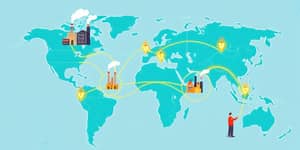
Second, digitalization accelerates across Asia, Africa, and Latin America, with massive digital infrastructure investment surge underpinning e-commerce, fintech, and smart cities. Third, manufacturing relocation driven by geopolitical shifts sees supply chains diversify away from China, favoring India, Vietnam, and Mexico.
Demography and geography confer significant advantages. Young populations in India, Nigeria, and Egypt promise labor force expansions, while aging giants like China and Western Europe face shrinking workforces. Resource endowments—oil, minerals, arable land—will continue to shape growth trajectories.
Quality of governance and institutional strength remains a critical divide. Nations that can combine strategic investments with transparent, adaptive institutions will outperform those mired in corruption or rigid controls.
Understanding these shifts is essential for long-term strategy. Companies should consider diversifying production into rising markets, participating in green energy projects, and leveraging digital infrastructure growth. Investors may find high-growth opportunities in frontier markets, but must hedge against commodity cycles and political risks.
Key practical steps include:
While the US, China, and India will anchor the global economy, a diverse array of rising powers—from Indonesia to Guyana—will reshape trade, investment, and innovation. The interplay of technological advances, demographic trends, and geopolitical maneuvering will determine which nations emerge as true superpowers.
Success will hinge on adaptability: economies that embrace digital transformation, sustainable practices, and inclusive governance will outpace those reliant on old models. For decision-makers, the time to engage with these trends is now. By aligning strategies with the trajectories outlined here, businesses and nations can secure a brighter, more balanced future in the evolving economic order.
References