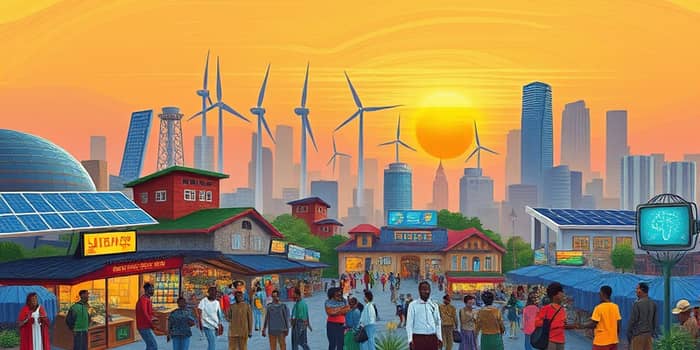
Africa is on the cusp of an economic renaissance, driven by a blend of youthful energy, strategic reforms, and resource abundance. This article explores the data and trends that shape the continent’s promising future, and outlines actionable strategies for investors, policymakers, and entrepreneurs.
In 2025, Africa’s nominal GDP is projected to reach $2.83 trillion, reflecting a steady recovery post-global disruptions. Continent-wide real GDP growth is expected to climb from 3.3% in 2024 to 3.8%–3.9% in 2025, potentially accelerating to 4%–4.4% by 2027.
Sub-Saharan Africa is forecasted to grow 3.8% in 2025 and average 4.4% annually through 2027, outpacing many emerging regions. According to the IMF, regional growth could hit 6.6% in 2025 when excluding the giants India and China.
Country-level performance is even more compelling: 21 nations are poised to exceed 5% growth in 2025, with Ethiopia, Niger, Rwanda, and Senegal targeting or surpassing 7%.
The digital revolution is reshaping commerce across Africa. Smartphone penetration and mobile payment platforms such as M-Pesa have enabled annual e-commerce growth exceeding 20% in leading markets. This cutting-edge digital solutions wave is complemented by fintech innovators like Flutterwave and Paystack, rapidly expanding financial inclusion.
Renewable energy projects are attracting global capital as investors seek to participate in the strategic green energy transition. Solar parks in Morocco and wind farms in South Africa showcase Africa’s potential as a regional energy hub. Meanwhile, AgriTech startups leverage data and automation to address climate risks and boost yields, with projections suggesting the agricultural sector could reach $1 trillion by 2030.
Healthcare and education technologies are similarly transformative. Telemedicine platforms are broadening access, while EdTech solutions are meeting surging demand for quality learning. These innovations promise to unlock the continent’s demographic dividend by enhancing human capital.
Reforms such as tax digitalization, value addition in mining and agriculture, and harmonized financial regulations are strengthening the business environment. Governments are championing export promotion, 24-hour economies, and startup-friendly policies to sustain momentum.
Addressing these headwinds requires coordinated policy action, strengthened institutions, and targeted social programs to ensure inclusive growth.
These strategic moves can propel African markets to new heights of resilience and competitiveness, offering unprecedented investment opportunities for stakeholders.
Nigeria is set to grow over 4.2% in 2025, driven by technology and financial services, with inflation gradually easing. Ghana’s GDP is outpacing peers at over 6%, fueled by gold exports, ICT, and banking innovations.
Ethiopia, Rwanda, Senegal, and Niger are projected to exceed 7% annual growth, ranking among the fastest-growing economies worldwide. Meanwhile, South Africa and Egypt—Africa’s largest economies—are investing in diversification to stimulate growth beyond traditional sectors.
Africa’s emerging markets represent a tapestry of opportunity woven from demographic vitality, resource abundance, and innovation. By fostering robust institutions, embracing digital transformation, and implementing forward-looking policies, stakeholders can help unlock the continent’s full potential. The stage is set for Africa to chart its own path toward sustainable prosperity and inclusive growth.
References